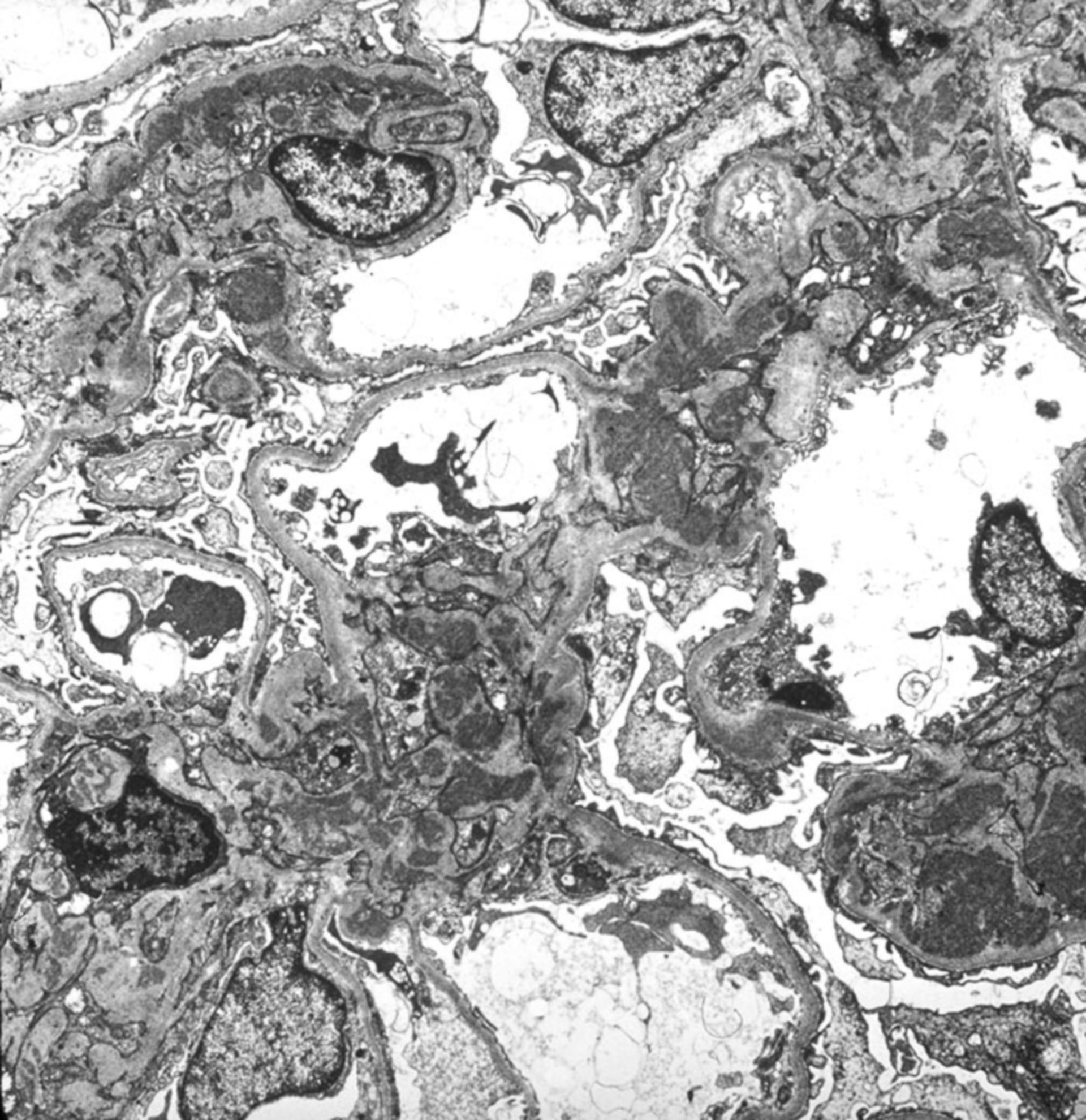
Part of the glomerulum. All mesangium fields shown here contain massive osmiophilic depots. The peripheral basal membrane is only slightly changed. Osmiophilic depots are not found here.
Commentary:
The IgA nephritis and the Schönlein-Henoch syndrome can be seen as two parts of the same disease. The IgA nephritis is the limited form. The Schönlein-Henoch syndrome shows up to 50% of kidney affection.
The most common glomerulonephritis worldwide (around 30%) is the immune complex nephritis with circulating IgA immune complexes in the serum. In most cases this is idiopathic. The amount of diseases showing IgA debris in glomeruli is large. Some of the most important diseases are rheumatoid diseases, liver cirrhosis, celiac disease, psoriasis, Wiskott-Aldrich-syndrome. In most cases no etiology is found. Primary manifestations occur after infections of the respiratory tract or stress. Periods of macrohematuria with or without proteinuria, hypertension or rapid progressive kidney insufficiency. The prognosis is good in the slow progressing form. Fast progression with formation of extracapsular half moons is possible. The more protein is found in the urine, the worse the prognosis. Recurrence after transplantation is around 50%.
Source: ©PathoPic