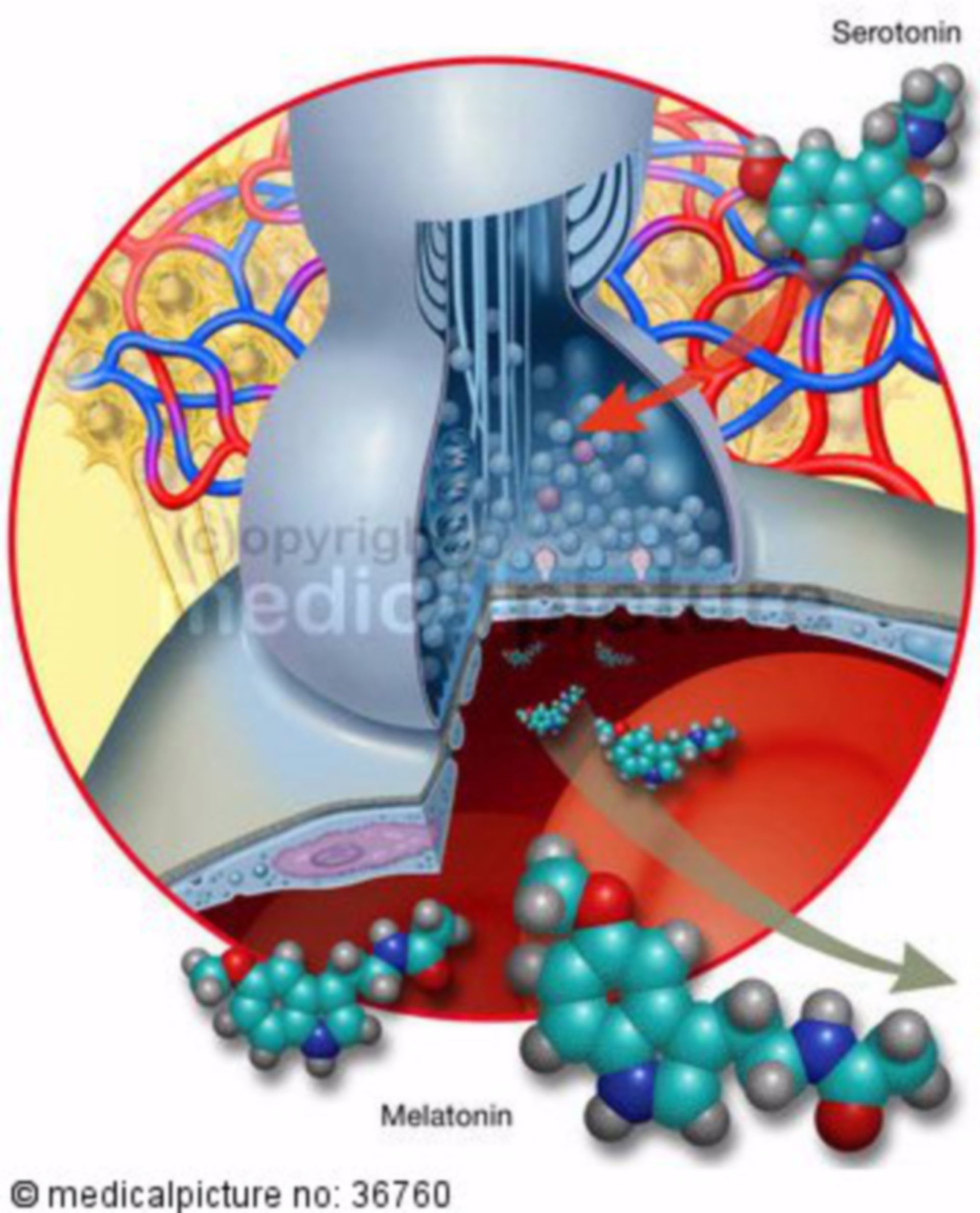
Synapse with serotonin and melatonin
Illustration of a synapse. Synapses are contact points between nerves or nerves and other cells. There are electrical or chemical synapses, the picture shows a chemical synapse. The upper part shows the terminal axon of a nerve cell, which contains vesicles filled with transmitters, in this case serotonin. When a stimulus arrives, the vesicles fuse with the membrane, releasing their neurotransmitters into the synaptic cleft - which is very thin, so that the transmitters quickly get to the receptors of the dendritic postsynaptic density of the following cell, where they cause a stimulus. Lack of serotonin can cause depression or anxiety. Melatonin is produced by the pineal gland (epiphysis) out of serotonin. The hormone melatonin regulates the circadian rhythm.
Your browser does not support JavaScript!