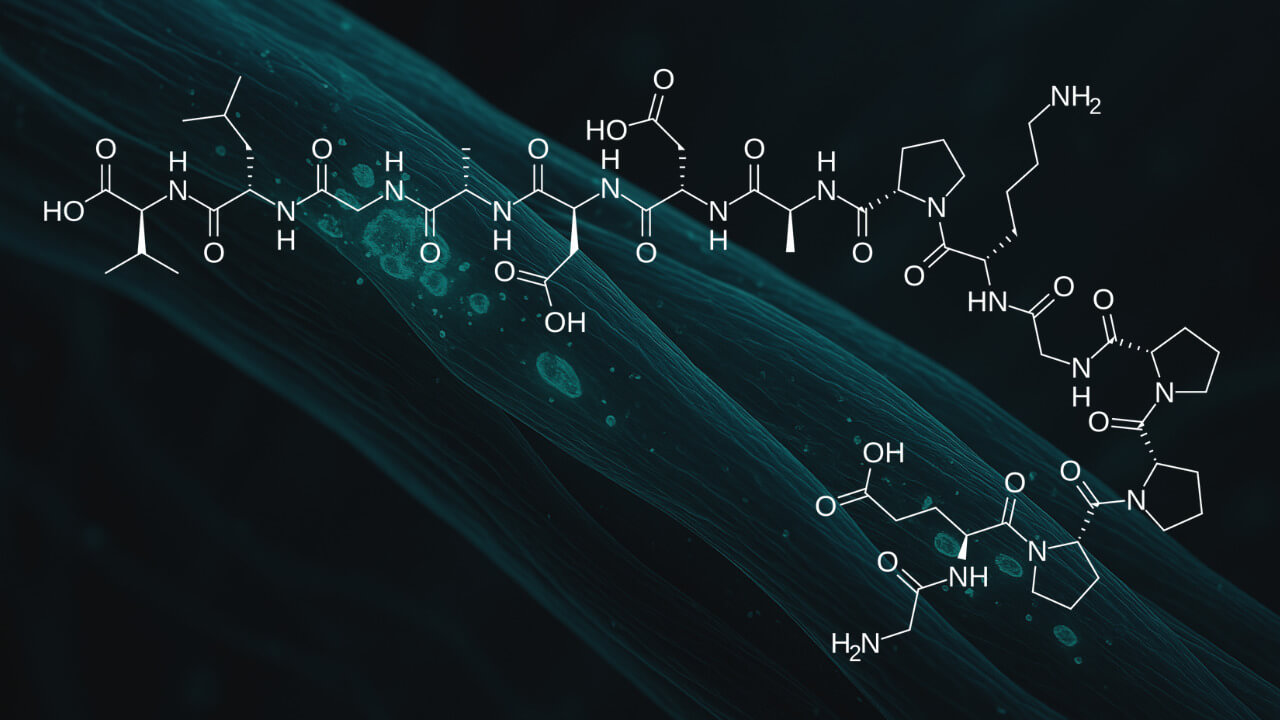
BPC-157 is considered one of the most intriguing yet controversial peptides in the biohacking and longevity community. Known as “Body Protection Compound,” it is believed to accelerate tissue healing—particularly in muscles, tendons, ligaments, and even the gastrointestinal tract. But what does current science really say?
BPC-157 (Body Protection Compound-157) is a synthetic peptide derived from a naturally occurring protein found in human gastric juice. It consists of 15 amino acids and has shown a wide range of biological effects in preclinical research—most notably, tissue regeneration, angiogenesis, and anti-inflammatory action.
Experimental data suggest that BPC-157 acts mainly through nitric oxide (NO) pathways, growth factor regulation (such as VEGF), and the modulation of inflammatory cytokines. Animal studies indicate improved regeneration of muscle, tendon, and even nerve tissue [1].
Most available studies on BPC-157 are based on animal models. These consistently demonstrate accelerated healing and reduced inflammation [2][3]:
Rats showed faster recovery from tendon and ligament injuries.
Mice exhibited improved healing of gastric ulcers and liver lesions.
Some studies reported neuroprotective and cardioprotective effects.
However, human trials are largely absent. Case reports and anecdotal applications suggest interesting outcomes but remain scientifically insufficient for any therapeutic claims.
BPC-157
BPC-157 appears to influence multiple biological systems:
Angiogenesis (stimulation of new blood vessel growth)
Modulation of nitric oxide synthase activity
Reduction of pro-inflammatory cytokines
Enhanced collagen synthesis and cell migration
These pathways could explain the regenerative and anti-inflammatory results observed in preclinical experiments.
BPC-157 is not approved as a drug or dietary supplement by any major regulatory authority such as the EMA or FDA. In Europe and the United States, it may only be sold for research purposes—not for human consumption or medical use.
The World Anti-Doping Agency (WADA) lists BPC-157 under Section S0: Non-approved Substances, making it prohibited for athletes in competitive sports [4].
Because there are no clinical studies in humans, safety, dosage, and long-term effects remain unclear. Potential risks include:
Impurities or contamination in unregulated preparations
Uncontrolled self-administration
Legal risks from import or use of non-approved substances
BPC-157 represents a fascinating research compound with remarkable preclinical potential. It may one day open new therapeutic approaches for tissue repair and inflammation control—but as of now, it remains unapproved and untested in humans.
Until regulatory approval and clinical data are available, its use in humans is not recommended. For those seeking natural support for recovery and regeneration, proven strategies such as sleep optimization, structured training, balanced nutrition, omega-3 fatty acids, collagen peptides, and citrulline supplementation remain the safer choice.
For particularly ambitious biohackers who enjoy experimenting with new supplements, exogenous ketones may also be a promising tool to enhance recovery, energy metabolism, and overall resilience
References[1] Sikiric P et al. Stable gastric pentadecapeptide BPC 157: novel therapy in gastrointestinal tract. Curr Pharm Des. 2014.[2] Kang EA et al. BPC 157 accelerates the healing of acetic acid-induced gastric ulcer in rats. J Physiol Pharmacol. 2018.[3] Pevec D et al. The influence of BPC 157 on muscle and tendon healing: a systematic review of preclinical studies. Biomed Pharmacother. 2021.[4] World Anti-Doping Agency (WADA). Prohibited List 2025 – Section S0 Non-approved Substances.